Maharashtra Cricket Association Stadium, Pune: Layout, Capacity, Facilities, Tickets Price

The Maharashtra Cricket Association (MCA) Stadium in Gahunje, Pune, is one of India’s most architecturally refined cricket venues. Designed by renowned British architect Sir Michael Hopkins, the stadium sits alongside the Mumbai–Pune Expressway, making it easily accessible for fans from both cities.
Today, the MCA Stadium has built a strong reputation for having one of the finest outfields in the country. It recently hosted high-profile matches during the ICC Men’s T20 World Cup and continues to be a key venue for IPL 2026.
Modern, open, and scenic — this stadium feels different the moment you walk in.
1. Maharashtra Cricket Association Stadium Layout and Architecture
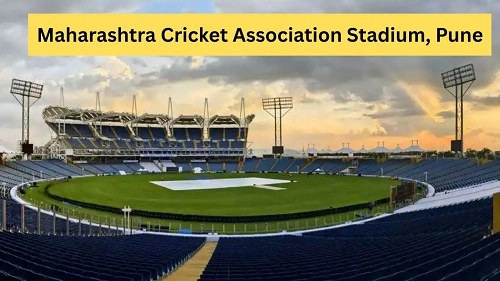
The MCA Stadium features a deep, elliptical bowl design. Unlike traditional circular grounds, its elongated shape enhances acoustics and sightlines.
One of its most striking design elements is the gap between the four main stands. These open corners allow natural airflow to pass through the stadium while offering sweeping 360-degree views of the surrounding hills. It rarely feels suffocating, even during afternoon matches.
The roof structure is supported without obstructive columns inside spectator zones, ensuring clear sightlines from almost every seat.
Key Stands and Sections
1. South Stand (Main Pavilion)
This is the structural backbone of the stadium. Built using over 6,000 metric tonnes of steel, it houses player dressing rooms, VVIP boxes, and administrative offices.
2. North Stand (Media Stand)
Located opposite the Pavilion, this stand includes a modern media center capable of accommodating up to 250 journalists.
3. East & West Stands
These sections form the bulk of general seating. Traditionally open-to-sky, additional roofing work was carried out between 2024 and 2025 to extend shade coverage.
4. Bowling Ends
The two ends are known as the Pavilion End (South) and the Hill End (North), referencing the natural terrain around the venue.
The entire design emphasizes openness and comfort over sheer vertical height.
2. Maharashtra Cricket Association Stadium Capacity
Seating Capacity: Approximately 37,000 to 42,700
While the original blueprint allowed expansion up to 55,000 seats, the current configuration prioritizes smoother pedestrian movement. Around 42,000 seats are considered optimal for safety and crowd circulation along the wide concourse that circles the arena.
Even at full capacity, the stadium rarely feels cramped due to its broad walkways.
3. Gates and Entry Points
Given its highway-side location, entry management is highly structured.
Gate No. 1
Reserved for VVIPs, players, and match officials.
Gate No. 4
A major entry point for fans arriving via the Mumbai–Pune Expressway.
General Gates
Numbered gates (often 1 through 20+ depending on layout) are distributed around the stadium perimeter. Tickets specify the assigned gate based on seating block. East Stand spectators typically use rear highway-facing gates.
Metro Connectivity
Unlike urban stadiums in Mumbai or Delhi, there is no direct metro connection yet. Fans rely on private vehicles, ride-sharing services, or organized shuttle buses from Pune city and Pimpri-Chinchwad areas.
Traffic congestion near the expressway exit is common on match days.
4. Modern Facilities
The MCA Stadium has steadily improved its infrastructure over the years.
Sand-Based Drainage System
The stadium uses a three-layer drainage system consisting of gravel, grit-sand, and silica-sand. Even during heavy monsoon rain, water is absorbed efficiently, allowing play to resume within 30 to 45 minutes in many cases.
Bermuda Grass Outfield
The outfield is covered in high-quality Bermuda grass and maintained using a pop-up automatic sprinkler system. It is widely regarded as one of the fastest outfields in India.
LED Screens
Four massive 50-square-meter LED screens from Barco (Belgium) are positioned around the ground. These provide clear, high-definition replays visible from all sections.
Amenities
The complex includes 38 sanitary blocks and a dedicated water treatment plant connected to the Pavana River. This ensures a reliable supply of potable water throughout match days.
5. Maharashtra Cricket Association Stadium Ticket Pricing
Ticket prices for IPL 2026 and international matches remain competitive compared to metro cities.
General Gallery
East / West Upper Stands – ₹800 – ₹1,500
Mid-Tier
North / South Lower Stands – ₹2,000 – ₹4,500
Premium
South Pavilion / Club House – ₹6,000 – ₹12,000
Corporate Boxes
Hospitality Lounges – ₹15,000 – ₹25,000+
Tickets are primarily sold via BookMyShow and Paytm Insider. QR-code-based digital tickets are standard for entry in 2026.
High-demand IPL matches often sell out quickly.
6. Prohibited Items and Fan Experience
Security measures are strict.
Strictly Banned: Bags, power banks, coins, umbrellas, helmets, and outside food.
Allowed: Mobile phones and wallets only.
Accessibility
The stadium offers wheelchair-accessible entrances and exits. However, fans have noted that only one primary working lift for disabled access is available in the pavilion area.
Parking
The venue has extensive parking capacity — approximately 3,500 cars and 12,000 two-wheelers. Still, traffic congestion at the expressway exit can be heavy.
Arriving at least three hours before the toss is strongly recommended.
Upcoming Major Events
March 2026 – Hosting key IPL 2026 league matches.
In conclusion, The Maharashtra Cricket Association Stadium stands out for its thoughtful architecture and scenic openness. It may not dominate headlines like mega-venues, but it delivers consistently — strong outfield quality, efficient drainage, and comfortable spectator movement.
Strategically positioned between Mumbai and Pune, it has become a central cricket hub in western India.
For players, it offers a fast outfield and fair conditions. For fans, it offers space, structure, and a clean view from every angle — exactly what a modern cricket stadium should provide.