Over the past few years, one landmark has quietly reshaped the economic landscape of western India. The Narendra Modi Stadium, located in Motera, has become far more than a cricket venue. It is now a powerful engine for tourism, business activity, and urban development in Ahmedabad.
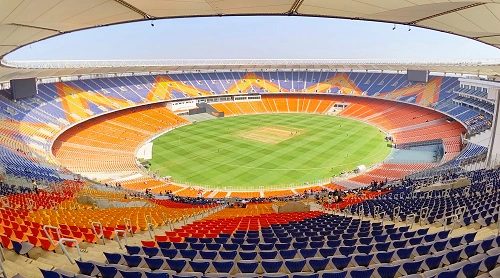
With a seating capacity of around 132,000, it is the largest stadium in the world. But the real story lies outside the stadium walls. Hotels are filling up during matches. Restaurants see record crowds. Airlines and railways report spikes in travel whenever a major game is scheduled.
In simple terms, the stadium has turned sports into an economic opportunity for the entire city.
A New Global Sports Destination
Before the redevelopment of the Motera complex, Ahmedabad was not widely known as a global sports destination. Today, that image has changed dramatically.
Major international cricket tournaments, IPL matches, and global sporting events regularly bring thousands of visitors into the city. The stadium hosted the final of the 2023 ICC Cricket World Cup, one of the most watched cricket events in history.
During such events, hotels across Ahmedabad operate at near-full capacity. Many fans travel from different Indian states and even from abroad to watch matches live.
Travel agencies now include stadium tours and match packages in their Gujarat travel plans. This has positioned Ahmedabad as an emerging sports tourism hub.
Surge in Hospitality and Hotel Industry
One of the biggest economic beneficiaries has been the hospitality sector.
Whenever a major match is scheduled, hotels across Ahmedabad see a sharp rise in bookings. Luxury hotels, budget stays, and homestays all experience increased demand.
Visitors arriving for cricket matches typically stay for several days. During this time they spend money on:
- Accommodation
- Local transport
- Food and dining
- Shopping and sightseeing
This steady inflow of visitors has encouraged new hotels to open near Motera and in central Ahmedabad. Property developers have also begun investing in hospitality projects around the stadium corridor.
Over time, the stadium has helped create a reliable tourism cycle linked to sporting events.
Boost to Local Businesses
The economic impact is not limited to large hotels or travel companies. Small businesses around the stadium benefit heavily whenever a match takes place.
Street vendors, food stalls, merchandise sellers, taxi drivers, and local shops see a surge in customers on match days.
Restaurants in nearby areas often report their highest daily sales during big cricket matches. Cafés and sports bars organize live screenings that attract large crowds.
Local entrepreneurs have also begun selling team jerseys, cricket memorabilia, and fan merchandise around the stadium area.
This ecosystem of small businesses has turned match days into mini economic festivals.
Infrastructure Development Around Motera
Large sports infrastructure often triggers broader urban development. The Motera stadium project is a clear example.
To support the huge number of spectators arriving for events, authorities improved roads, transport networks, and public facilities around the stadium.
The stadium is connected to the Ahmedabad Metro, making it easier for fans to travel from different parts of the city.
Road expansions, improved lighting, parking facilities, and better traffic management have transformed the surrounding area.
These improvements benefit residents year-round, not just during sports events.
Over time, this type of infrastructure investment increases property values and attracts new businesses.
Growth of Sports Tourism
Sports tourism is a growing industry worldwide. Cities like Melbourne, London, and Barcelona have long benefited from it.
Ahmedabad is now entering this league.
Visitors coming for matches often explore other famous attractions in the city and nearby regions. Some of the popular tourist spots include:
- Sabarmati Ashram
- Adalaj Stepwell
- Kankaria Lake
Tour operators have started combining cricket match tickets with city sightseeing packages.
As a result, the stadium indirectly increases footfall at many historical and cultural sites across Ahmedabad.
Global Visibility for Ahmedabad
Hosting international sporting events provides enormous global exposure.
When matches take place at Narendra Modi Stadium, millions of viewers watch the broadcast worldwide. Television coverage frequently shows aerial shots of Ahmedabad, the Sabarmati riverfront, and the city skyline.
This kind of global visibility works as free tourism marketing for the city.
International journalists, sports commentators, and visiting fans often share their experiences online. Social media posts, travel blogs, and news coverage further amplify Ahmedabad’s image as a modern and vibrant city.
Such visibility can influence future tourism decisions.
Job Creation and Employment
Large stadium projects also generate employment opportunities.
Construction of the stadium itself created thousands of jobs for engineers, architects, construction workers, and technicians.
Even after completion, the stadium continues to support many forms of employment, including:
- Stadium management staff
- Security personnel
- Event organizers
- Hospitality workers
- Food and beverage vendors
- Maintenance teams
During large matches, additional temporary workers are hired for crowd management, ticketing, and operations.
This creates seasonal employment opportunities for many local residents.
Real Estate Growth Around the Stadium
Major sports infrastructure often increases real estate demand in nearby areas.
Motera and surrounding neighborhoods have seen significant growth in property prices since the redevelopment of the stadium.
Developers are building new residential complexes, commercial offices, and retail spaces in the region.
The improved connectivity through metro lines and better roads has made the area attractive for homebuyers and investors.
In many ways, the stadium has acted as a catalyst for long-term urban expansion in this part of Ahmedabad.
A Venue for Mega Events Beyond Cricket
Although cricket is the primary attraction, the stadium also hosts other large-scale events.
Political gatherings, cultural programs, concerts, and community events are sometimes held here.
Because of its massive capacity, the stadium can host some of the largest public gatherings in the world.
Such events bring additional visitors to the city and contribute further to tourism revenue.
Long-Term Economic Impact
The economic benefits of Narendra Modi Stadium extend far beyond individual matches.
Over time, the venue has helped Ahmedabad strengthen its reputation as:
- A major sports city
- A tourist destination
- A modern urban center
Sports infrastructure often acts as a long-term investment rather than a short-term project.
With regular international matches, IPL games, and future tournaments likely to be hosted here, the stadium will continue generating economic activity for decades.
Conclusion
The Narendra Modi Stadium is not just the world’s largest cricket venue. It has become a powerful symbol of Ahmedabad’s growth and ambition.
By attracting international sporting events, boosting tourism, supporting local businesses, and improving infrastructure, the stadium has created ripple effects across the city’s economy.
Hotels fill up, restaurants thrive, small vendors earn more, and visitors discover the cultural richness of Ahmedabad.
In the years ahead, as more global events arrive, the stadium will likely strengthen Ahmedabad’s position as one of India’s most important sports and tourism destinations.