Rajiv Gandhi International Cricket Stadium, Hyderabad: Layout, Capacity, Facilities, Tickets Price

The Rajiv Gandhi International Cricket Stadium in Uppal, Hyderabad, is one of India’s most exciting modern cricket venues. Known for its batting-friendly pitches and the roaring “Orange Army” of Sunrisers Hyderabad supporters, the stadium has built a strong identity in a relatively short time.
Owned and operated by the Hyderabad Cricket Association (HCA), it serves as the home ground of Sunrisers Hyderabad (SRH). For the 2026 season — including matches of the ICC Men’s T20 World Cup — the stadium underwent major upgrades aimed at improving fan comfort and bringing infrastructure up to global standards.
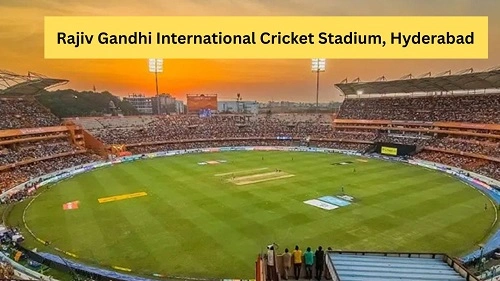
1. Stadium Layout and Architecture
The stadium follows a two-tier design that ensures clear sightlines from almost every seat. Unlike older Indian venues with obstructive pillars, this ground was built with openness in mind.
One of its key architectural features is the tensile canopy roof covering the North and South stands. This structure allows airflow from Hyderabad’s southwest winds to pass through, helping cool the venue during intense summer heat.
The bowl shape is slightly elongated rather than perfectly circular. This gives different viewing angles but maintains close proximity to the boundary.
Key Stands and Ends
1. North End (V.V.S. Laxman Stand)
Named after Hyderabad’s legendary cricketer, this stand houses the massive electronic scoreboard and multiple corporate boxes. It is one of the loudest sections during IPL matches.
2. Pavilion End (South Stand)
This is the main operational hub. It includes the players’ dressing rooms, commentary box, match referee area, and VVIP seating.
3. Mohammed Azharuddin Stand
A prominent section honoring the former Indian captain, typically positioned within the North pavilion area.
4. East & West Stands
Mostly open-to-air seating areas. In late 2025, the West Stand received new canopy installations to increase shaded seating capacity. The East Stand also saw partial roofing improvements.
The overall design balances modern engineering with practical climate adaptation.
2. Capacity
- Total Structural Capacity: Approximately 55,000
- Effective Match Capacity: Around 39,000 to 40,000
While the structural capacity allows for over 50,000 spectators, international and IPL matches typically cap attendance around 39,000 for improved comfort and smoother crowd movement at entry and exit gates.
This adjustment helps reduce congestion and ensures better emergency management.
Despite the moderated numbers, the atmosphere remains electric — especially when SRH are chasing under lights.
3. Gates and Accessibility
Spread across 16 acres, the stadium is well connected to Hyderabad’s expanding metro network.
Gate No. 1
Reserved exclusively for players, match officials, and VVIPs.
Gate Nos. 2–11
Primary entry points for general ticket holders, providing access to East, West, and North stands.
Security checks are systematic but can be time-consuming during high-profile matches. Arriving early is strongly advised.
Metro Connectivity
The Uppal Metro Station (Blue Line) and Stadium Metro Station are the most convenient transport options. The stadium entrance is just a 5–7 minute walk from the metro exit.
Metro remains the fastest and most reliable way to reach the venue on match days.
Parking
On-site parking is limited and mostly reserved for two-wheelers and VIP vehicles. General four-wheeler parking is usually arranged at nearby open grounds such as the Survey of India ground, approximately 500 meters away.
4. Modern Facilities
In 2025 and early 2026, the HCA invested over ₹120 crore into a major renovation drive.
Swanky Washrooms
Fan feedback in previous seasons highlighted restroom conditions. A complete renovation was undertaken across all stands. The new washrooms are modern, cleaner, and better ventilated.
LED Floodlights
The old lighting system was replaced with advanced LED floodlights. These improve visibility during day-night matches and are especially effective for pink-ball cricket. The lighting system also supports entertainment light shows during innings breaks.
New Canopies
The West Stand received new roofing in 2025, increasing shaded seating for afternoon games. Additional roofing improvements were also made in select East Stand sections.
Pitch & Outfield
The stadium won the BCCI Best Pitch and Ground Award in 2024. It uses a high-quality sub-soil drainage system that clears water quickly during the monsoon.
The pitch is known for being batting-friendly, with consistent bounce. High-scoring games are common here, making it a favorite for T20 contests.
5. Ticket Pricing (2026 Season)
Ticket prices are structured to accommodate a wide range of fans.
General Gallery
East / West Second Terrace: ₹499 – ₹1,200
These are budget-friendly seats with good elevation views.
Mid-Tier
North / South First Floor
₹1,500 – ₹4,500
These sections offer better proximity and partial shade.
Premium
Pavilion Ground Floor
₹5,000 – ₹8,000
Close to the players’ area with enhanced comfort.
Corporate Boxes
North / West Boxes
₹12,000 – ₹15,000+
These include air-conditioned hospitality services and private seating.
Tickets are generally sold online through official IPL and ICC ticketing platforms. For high-profile games, early booking is strongly recommended.
Prohibited Items and Fan Guidelines
Security measures are strict.
Prohibited Items: Backpacks, power banks, outside food and water, umbrellas, coins, lighters, and professional cameras.
Allowed: Mobile phone, wallet, and physical match ticket.
Network Tip
Due to heavy crowd density and signal restrictions, mobile data may slow down inside the stadium. It’s advisable to carry some physical cash in case digital payments fail at food counters.
2026 Season Outlook
For the 2026 IPL and T20 World Cup season, the Rajiv Gandhi Stadium is positioned as one of India’s most modern mid-sized venues.
With improved facilities, better seating comfort, upgraded lighting, and strong metro connectivity, it offers a balanced match-day experience.
When the Orange Army fills the stands, the stadium transforms into a sea of color and noise — a true home fortress for Sunrisers Hyderabad.
Conclusion
The Rajiv Gandhi International Cricket Stadium represents Hyderabad’s modern cricketing ambition. It may not be the largest venue in India, but it delivers where it matters — atmosphere, pitch quality, and fan experience.
With continuous upgrades and strong infrastructure backing, it stands ready for the biggest global tournaments.
For Hyderabad, this stadium is more than just a venue. It is the heartbeat of cricket in the city.